Department of Mechanical Engineering

About the Department

The Department of Mechanical Engineering was established in the year 2009 with an initial intake of 60 seats in UG programme. Department also offer two post graduate programmes, M. Tech with specialization in CAD/CAM and Thermal Engineering with 24 and 18 seats respectively. The Department has highly dedicated and dynamic faculty who aim to work towards establishing an excellent teaching, learning and research environment to match with the advanced technologies in engineering.

The department has good infrastructure along with state of the art laboratories. The labs are equipped with softwares like AutoCAD, CATIA, Creo, ANSYS, MATLAB & CNC technology.

The faculty actively participate and conduct various research activities and have published a good number of technical papers in various national and international conferences and proceedings.
Courses


Programs Duration Intake
B.Tech(Mech) 4 Years 60

Vision

To impart high standards and produce eminent mechanical engineers who play a key role in the social upliftment.


Mission


1. To provide in-depth technical knowledge for skill development.
2. To give special focus on training and add-on programs.
3. To encourage creativity and develop entrepreneurial mindset.

PEOs:


1. To prepare students with strong fundamentals to have a successful career in the field of Mechanical Engineering.
2. To strengthen self learning abilities and encourage students to pursue higher studies.
3. To inculcate ethical values and ability to work in a team.


PSOs:


1. Students will be able to analyze and provide engineering solutions in the areas related to Engineering Mechanics, Machine Design, Manufacturing and Thermal Engineering."
2. Students will be able to develop and design mechanical engineering equipment using simulation software.

PROGRAM OUTCOMES(POs)


PO1: Engineering Knowledge: Apply knowledge of mathematics, science, engineering fundamentals and an engineering specialization to the solution of complex engineering problems.
PO2: Problem Analysis: Identify, formulate, research literature and analyze complex engineering problems reaching substantiated conclusions using first principles of mathematics, natural sciences and engineering sciences.

PO3: Design/ Development of Solutions: Design solutions for complex engineering problems and design system components or processes that meet specified needs with appropriate consideration for public health and safety, cultural, societal and environmental considerations.

PO4: Conduct investigations of complex problems: Use research-based knowledge and research methods including design of experiments, analysis and interpretation of data and synthesis of information to provide valid conclusions.

PO5: Modern Tool Usage: Create, select and apply appropriate techniques, resources and modern engineering and IT tools including prediction and modeling to complex engineering activities with an understanding of the limitations.

PO6: The Engineer and Society: Apply reasoning informed by contextual knowledge to assess societal, health, safety, legal and cultural issues and the consequent responsibilities relevant to professional engineering practice.

PO7: Environment and Sustainability: Understand the impact of professional engineering solutions in societal and environmental contexts and demonstrate knowledge of and need for sustainable development.

PO8: Ethics: Apply ethical principles and commit to professional ethics and responsibilities and norms of engineering practice.

PO9: Individual and Team Work: Function effectively as an individual, and as a member or leader in diverse teams and in multi-disciplinary settings.

PO10: Communication: Communicate effectively on complex engineering activities with the engineering community and with society at large, such as being able to comprehend and write effective reports and design documentation, make effective presentations and give and receive clear instructions.

PO11: Project Management and Finance: Demonstrate knowledge and understanding of engineering and management principles and apply these to one’s own work, as a member and leader in a team, to manage projects and in multidisciplinary environments.

PO12:Life-long Learning: Recognize the need for and have the preparation and ability to Engage in independent and life- long learning in the broadest context of technological Change.

Program Assessment & Quality Improvement Committee (PAQIC) Responsibilities

  1. Program Assessment & Quality Improvement Committee consists of program coordinator, course coordinator and faculty representatives.
  2. PAQIC verifies subject - CO mapping and CO - PO mapping done by faculty.
  3. The committee monitors the attainment of PO and PEOs.
  4. Evaluates program effectiveness and proposes necessary changes.
  5. Prepares periodic reports, records on program activities, progress, status or other special reports for management.
  6. Motivates the faculty and students towards attending workshops, developing projects, working models, paper publications to conduct research
  7. Interacts with students, faculty, program coordinators, course coordinator and outside/community agencies (through their representation) in facilitating program educational objectives.
  8. PAC meets at least once in 6 months to review the program and submits report to Department Academic Committee.

Program Assessment & Quality Improvement Committee (PAQIC)

SnoMembers Names
1 Head of the DepartmentProf. SL Narasimha Reddy
2 Senior Faculty Members (05) Dr. R. Mohan
Mr. Ashoke Kumar
Mrs. M.Sushmitha
Mr. P. Parsuramulu
Mrs. B. Shilpa

DEPARTMENT ACADEMIC COMMITTEE

Department Academic Committee (DAC) Responsibilities:


  1. DAC consists of head of the department, program coordinators, and the representatives of key internal and external stake holders.
  2. Assess the CO - PO mapping done by faculty.
  3. To monitor the progress of the program and devises plan to improve PEO, PO attainment result.
  4. To assess the curriculum gap subjects identified by faculty and to organize guest lectures.
  5. DAC meets at least twice in a year to review the programs.
  6. To collect and analyze faculty feedback from faculty self appraisal forms and initiate remedial action.
  7. To prepare the industrial visit / guest lecture schedule date wise and monitor the same and to check at least 2 local Industrial visits and 2 guest lecture for each class.
  8. Analyze and initiate action on mentor feedbacks.
  9. Analyze and initiate action on student course feed back forms.
  10. Analyze and initiate action on various feedbacks student exit, parent feedback, employer feedback, alumni feedback and student facilities feedback.

Department Academic Committee:


SnoMembers Names
1 Head of the DepartmentProf. SL Narasimha Reddy
2 Senior Faculty Members (05) Dr. T. Praveen Kumar
Mr. Ch. Sudhakar
Mr. Ch. Rajeshwar Goud
Mr. S. Naveen
Mr. G. Chandra Shekar Reddy

About HOD


Mr.S.L.NARASIMHA REDDY
M.Tech,(Ph.D)

He has a vast teaching experience of 33 years. He did his B.Tech from Sri Venkateswara University and M.Tech from JNTU, Anantapur. Doing his Ph.D on fuel cells at JNTU Hyderabad.


He is a life member of Indian society for technical education and was a chairman, ISTE chapter, Vasavi polytechnic. He conducted a number of workshops on technical education with resource persons from technical teachers training institute (TTTI), Chennai.


MESSAGE


Mechanical Engineering is one of the oldest and broadest Engineering Disciplines. It emerged as a field during the Industrial Revolution and has continually evolved by incorporating numerous technical advancements. First and foremost, one must have a penchant for Mechanical components and machinery and how these machines work. Mechanical engineers today use core principles of Mechanics, Thermodynamics and structural analysis with computer aided tools to design and analyze manufacturing plants, industrial equipment, heating and cooling systems, motorized vehicles, aircrafts, robotics, medical devices and much more.

Demand for professionals in this conventional discipline can never cease. Mechanical engineers today are pursuing developments in the fields such as Composites, Mechatronics and Nano technology. Mechanical Engineering overlaps with Aerospace , Civil , Electrical, Petroleum and Chemical Engineerings to varying amounts.
I wish all the students of Mechanical Engineering a great future.


Faculty Details

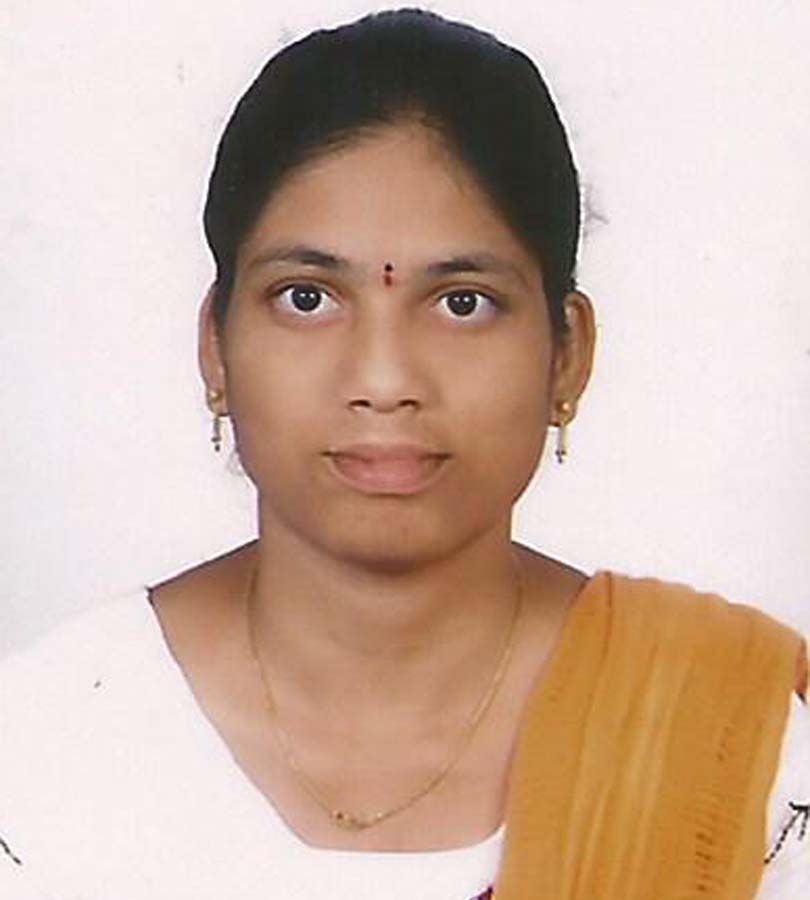
Photo Name Qualification JNTUH Reg. ID Designation Association Type Teaching Experience Date of Joining
Dr.P.SEKHAR BABU M.Tech,Ph.D 5100-150413-170557 Professor & PRINCIPAL Regular 33 Years 05-07-2022
Dr.K.ESHWARA PRASAD M.Tech,Ph.D 6378-180416-173131 Professor Regular 41 Years 15-07-2021
Dr.PRAVEEN TIKKAWAR M.Tech,Ph.D 61150406-154123 ASSOC. PROFESSOR Regular 23 Years 06-03-2020
Mr.SINGA LAKSHMI NARASIMHA REDDY M.Tech 54150407-121856 Assoc. Professor & HOD Regular 34 Years 01-07-2011
Dr. R. Mohan M.Tech, Ph.D 91150404-124157 ASSOC. PROFESSOR Regular 15 Years 20-11-2024
Mr. SHANBAUG NAVEEN M.Tech 34150407-134103 Assistant Professor Regular 15 Years 01-07-2011
Mr.CHERUKUPALLI SUDHAKAR M.Tech,(Ph.D) 7850-150408-155546 Associate Professor Regular 15 Years 08-04-2015
Ms. BASIREDDY SHILPA REDDY M.Tech 4108-160307-100131 Assistant Professor Regular 11 Years 21-12-2016
Ms. MEKALA SUSMITHA M.Tech 2953-170121-102703 Assistant Professor Regular 10 Years 21-12-2016
Mrs. THODETI SWATHI M.Tech 5599-170121-100228 Assistant Professor Regular 4 Years 21-12-2015
Mr.CHENNAMGARI RAJESHWAR GOUD M.Tech 3095-150520-103709 Assistant Professor Regular 15 Years 12-03-2019
Mr. P.PARUSHURAM M.Tech 9019-160224-122120 Assistant Professor Regular 12 Years 13-07-2021
Mr. G.CHANDRASHEKHAR REDDY M.Tech 4264-150409-131631 Assistant Professor Regular 22 Years 15-07-2022
Mr. Ch. Sai Krishna M.Tech - Assistant Professor Regular 7 Years 01-03-2021
Mr.P Ashok Kumar M.Tech 7868-170120-112943 Assistant Professor Regular 10 Years 07-07-2024
Mrs.A.SAILAJA M.Tech 7601-240906-225844 Assistant Professor Regular 11 Years 07-07-2024

Labs & Infrastructure

View Advanced Infrastructure